„Dimitrie Cupovski“ 13, 1000 Skopje +38923244000 ic@mchamber.mk
„Dimitrie Cupovski“ 13, 1000 Skopje +38923244000 ic@mchamber.mk
.jpg)

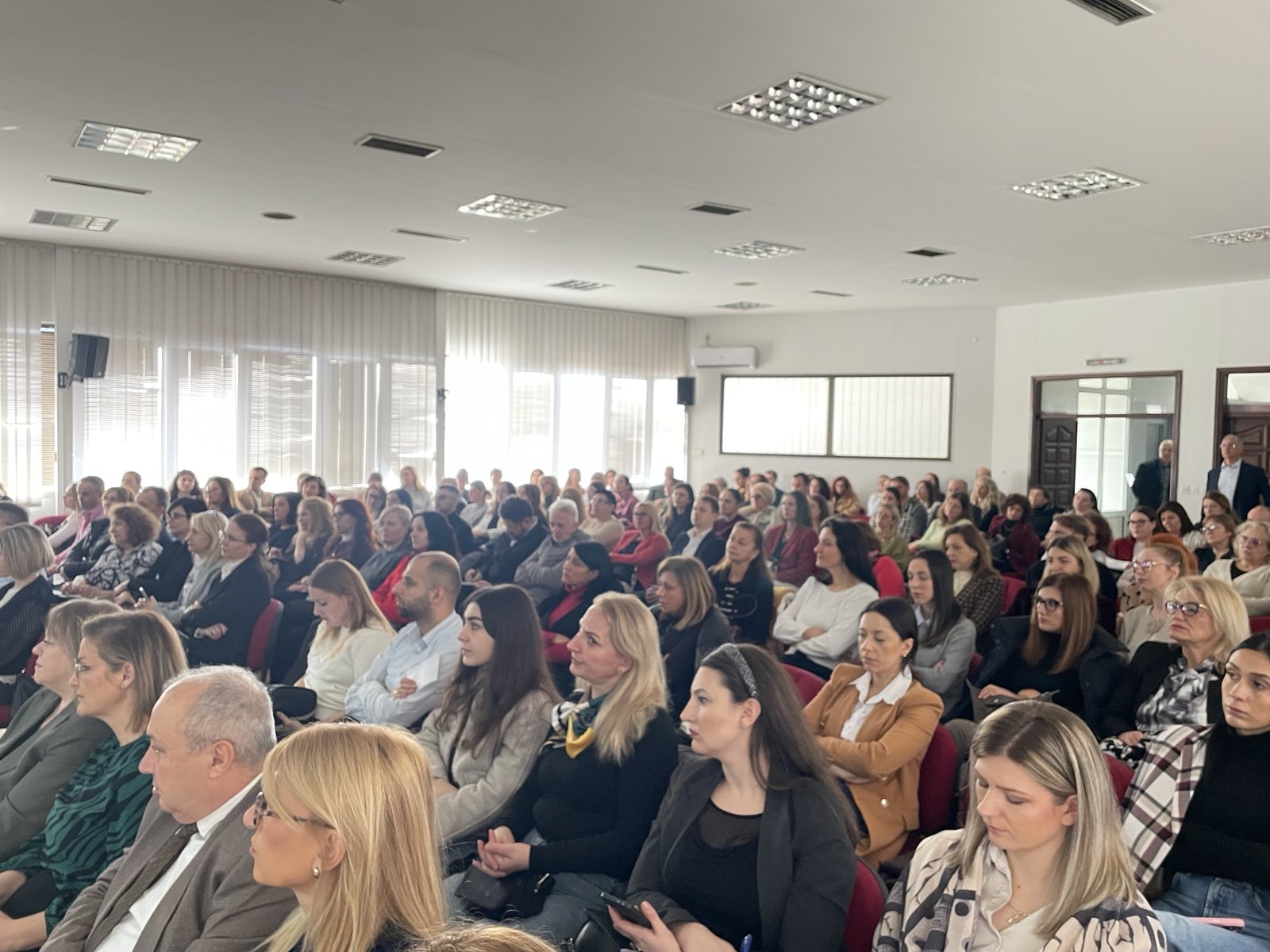

A presentation of the new electronic invoicing system (e-invoice) introduced by the Public Revenue Office (PRO), as well as of the institution’s ongoing projects, was held at the premises of the Economic Chamber of North Macedonia. The event was moderated by Gabriela Kulebanova, President of the Center for Micro, Small and Medium-sized Enterprises, who emphasized in her opening remarks the importance of timely communication between institutions and the business sector.
The event was organized through the Center for Micro, Small and Medium-sized Enterprises, which operates within the Economic Chamber of North Macedonia, with the aim of ensuring that companies become familiar in a timely manner with the implementation process, technical requirements, and practical aspects of using the new electronic invoicing model.
Representatives of the PRO presented the basic principles of the system, the obligations that will arise from it, the deadlines for harmonization, and the expected benefits of the new method of operation. Special emphasis was placed on the process of issuing and receiving e-invoices, control and verification, as well as integration with existing software solutions used by companies. It was noted that companies that already have their invoicing software will—after certain adjustments—be able to submit e-invoices to the PRO through an API connection. This method of e-invoice submission will begin testing on 1 January 2026.
In his introductory remarks, the Chamber’s Executive Director, Antoni Peshev, emphasized that the Economic Chamber will continue to support companies with relevant information, educational events, and consultations to ensure smooth and efficient adaptation to the new e-invoice system.
“This system will relieve companies, on the one hand, from unnecessary preparation of paper invoices which are difficult to audit, analyze, and store, while on the other hand it will provide the state with an efficient method for efficient analysis of what is truly happening in the national economy. I would like to convey several key principled observations to the PRO team. The system must be sustainable, practical, and fast. Without such a system, we risk major disruption, and it would be very unfortunate if we had to stop and upgrade it afterward. So leave room—better to make the system 100% functional and tested than to enter an adventure that will leave serious consequences. One of the key issues is also data protection and the potential for system breaches and operational blockages. Therefore, there must also be a plan B—what will happen if the system stops working for an hour or a day,” said Peshev.
The event was also addressed by the PRO Director, Elena Petrova, MA, who noted that the new electronic invoicing system will bring greater fairness in the economy and reduce the administrative burden for companies. She added that the process of introducing e-invoicing is a joint effort of institutions and the business community, working together to improve the system. The Director announced all projects currently underway within the PRO, explaining that the goal is to ensure timely and accurate fulfillment of tax obligations by all companies.
“We begin testing on 1 January. We will publish the integration specifications, enabling medium-sized and large companies to adapt their software. Afterwards, we will also release free applications for small firms,” Director Petrova emphasized.
At this event, Petrova also announced the largest IT investment in the history of the PRO, valued at 1.8 million euros, namely the procurement of equipment for a secondary site, which will significantly strengthen data and infrastructure security. Negotiations for the contract are currently in their final phase, and delivery and installation are planned for the first quarter of 2026.
There was significant interest from companies in the event. Participants had the opportunity to ask questions and receive clarifications regarding the most common dilemmas, such as technical preparation, data security, and the expected timeline for transitioning from paper to electronic invoices.




 Progressive Academy